
Operations
UPI payments and the art of matching the right invoice
Read India’s payments data, then build a daily routine for partial, unmatched and repeated entries.

An invoice is sent on Monday. Two payments arrive on different days from slightly different account names. A spreadsheet shows the customer has paid something, but the order team needs to know the remaining balance and which invoice the money belongs to. That is a reconciliation problem.
Look at volume and value as distinct signals
NPCI publishes both the number of UPI transactions and the amount carried through the network. A transaction count measures events. Aggregate value measures the money moved. Both combine multiple kinds of activity, including transfers between people and merchant payments. Neither number describes the receivables of an individual business.
How UPI transaction volumes moved in 2026
India · April–October 2026 · monthly UPI transactions in billions, including merchant and person-to-person transfers. Values rounded to two decimals.
- Apr22.35 billion
- May23.2 billion
- Jun22.72 billion
- Jul23.66 billion
- Aug24.51 billion
- Sep24.07 billion
- Oct25.47 billion
What it means A payment confirmation and an invoice settlement are different events. A useful payment workflow records which invoice an amount belongs to, checks duplicates and leaves ambiguous matches for review.
At a small business level, separate payment received from payment applied. Save the transaction reference, amount, date and original source even when you cannot match the payment immediately. Apply a payment to an invoice only when you have evidence of the connection.
Know what the bank entry can tell you
A bank or payment-provider entry can reliably tell you that money moved and give you a reference. It may carry little usable context about the customer’s order. A reference shared at checkout or written on an invoice provides a stronger match than a similar name or amount. If the details still do not identify the transaction, keep it visible for review.
UPI carried ₹31.53 lakh crore in October 2026
India · selected months in 2026 · UPI transaction value in ₹ lakh crore. Values include transfers and merchant payments.
What it means This is money moved across the payment system. For a business, a reconciliation process ties each deposit to the right customer balance and keeps a useful trail for transfers and partial payments.
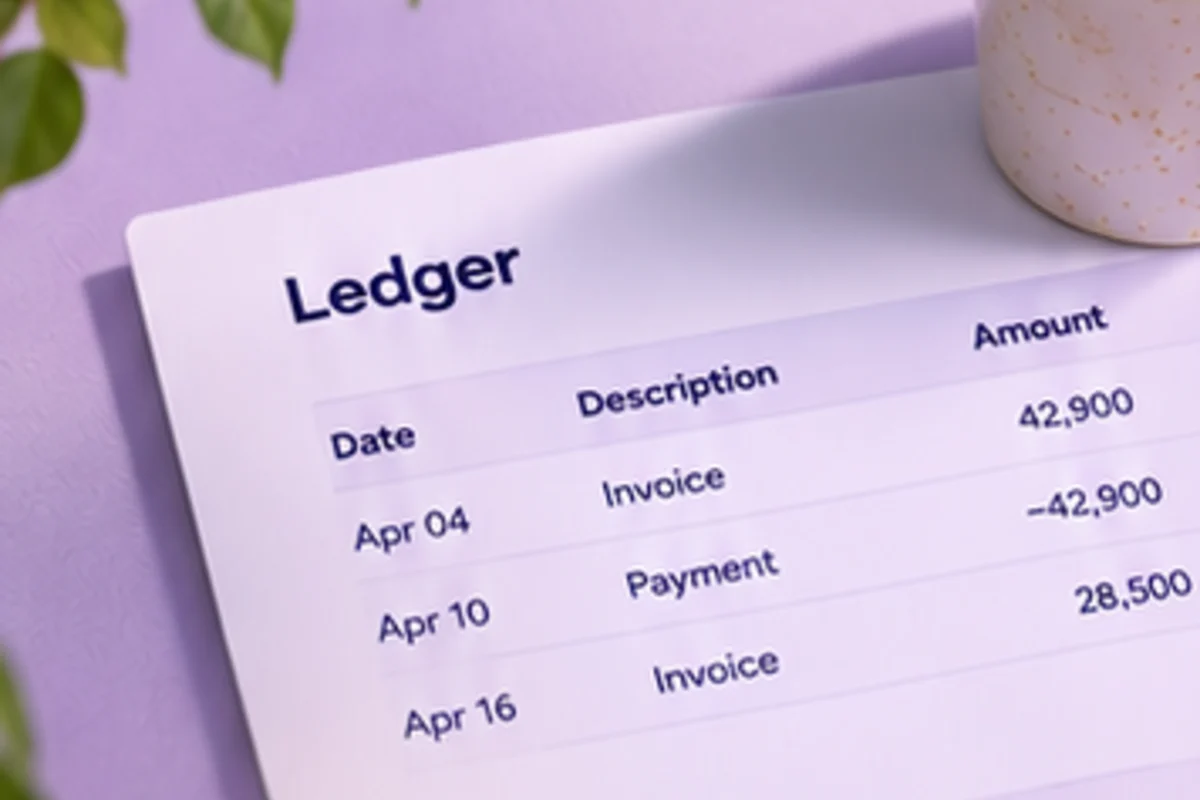
A useful reconciliation screen has a list of new entries, an easy way to find open invoices and a record of the person who applied a payment. Let staff view earlier payments when they match a repeat payment. Keep refunded and reversed transactions traceable so they do not quietly disappear from the customer history.
Use the payment mix to understand the ecosystem
NPCI also publishes a view with merchant and peer transfers separated. The August 2025 snapshot is older than the totals above. It illustrates why an aggregate UPI count cannot be read as the number of purchases from Indian businesses.
Merchant payments led UPI by transaction count
India · August 2025 · NPCI reported transaction volume, in billions. Rounded to two decimals.
- Person to merchant12.71 billion
- Person to person7.3 billion
What it means A merchant transaction is one component of UPI activity. The size of this component helps explain why payment context matters when a business reconciles its own deposits.
Agree an order for matching. Start with a direct reference to an unpaid invoice. Check the correct customer and currency, and verify that the amount is plausible. For unclear cases, route to a named person. Record any match override with a reason.
Worked example · Three payments against one invoice
Suppose an illustrative invoice is ₹20,000. The customer sends ₹7,000, then ₹5,000 and then ₹8,000. After the first payment the balance is ₹13,000; after the second it is ₹8,000; after the third it reaches zero. Each entry carries its own date and reference and points to the same invoice. A bank response that repeats the ₹5,000 event is a duplicate notification, not another payment.
If a fourth ₹1,000 arrives with no identifier, leave it for review until staff confirm whether it belongs to another invoice or needs to be recorded as unapplied. Keep your original documents and let the ledger show how the balance was reached.
What a reliable closing routine looks like
- Import entries and check for repeated references.
- Match clear payments and mark uncertain ones for an owner.
- Check partial, overpaid, returned and cancelled items.
- Compare the bank total with the recorded payments and preserve the review history.